University of Washington
Overall Goals
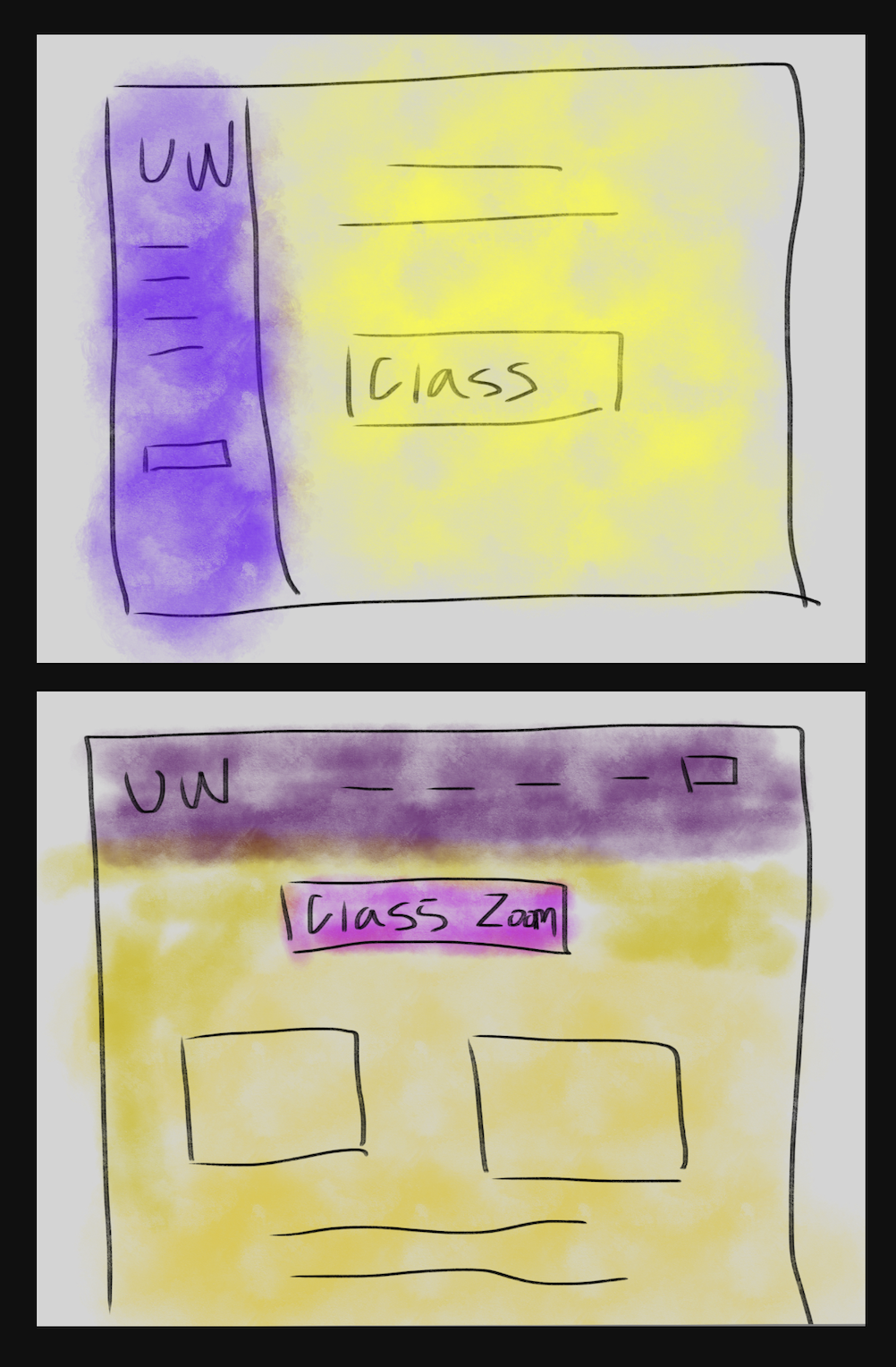
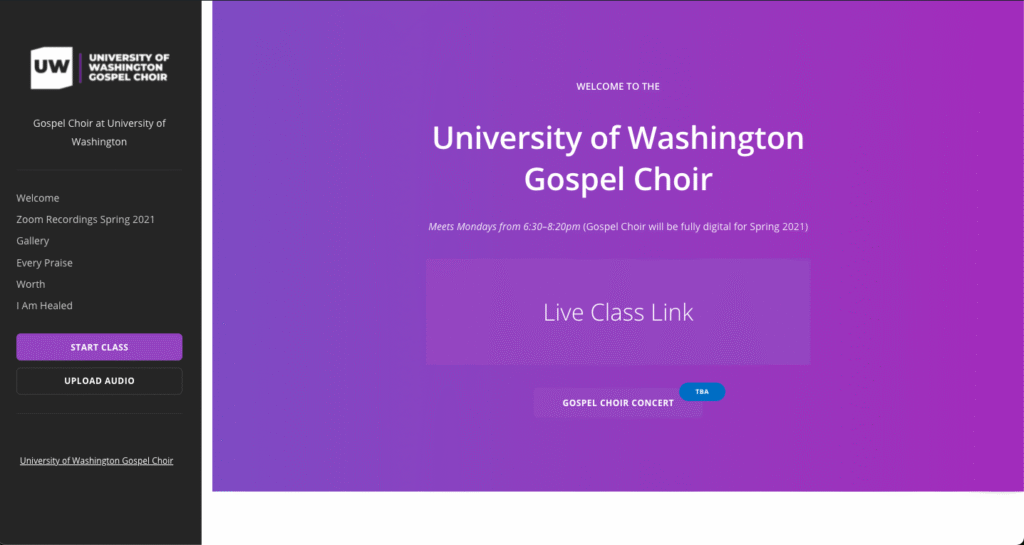
The professor wanted the user experience to be as seamless as possible. The primary needs were to allow students to access audio files and hop into their zoom class.
EASY ACCESS TO CLASS
- Targeting their need for website ease, I made the decision to create a large button on the landing page to allow students to get to their classes.
CLASS ORGANIZATION
- For this type of website, I wanted the menu and navigation to simulate tabs, that way, it feels like a more seamless navigation experience.
FILE UPLOADS
- They required a way for students to upload large audio and video files. This portion of the website required a large number of changes.
Process
Define
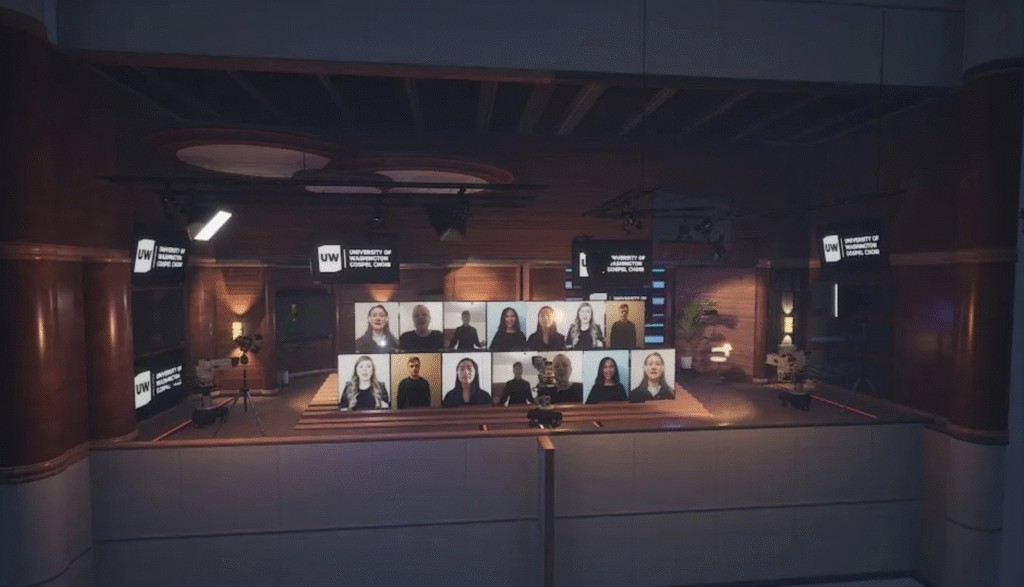
In response to the challenges posed by COVID-19, the University of Washington’s choir department required a robust platform to facilitate online learning and virtual performances. The project was defined with three core objectives: enable seamless sharing of audio files and instructions with students, provide a user-friendly interface for students to upload MP3/MP4 recordings, and support the live broadcasting of end-of-quarter concerts. The goal was to maintain the integrity of the choir’s educational and performance activities in a fully virtual environment.
Ideate
We employed agile development methods to brainstorm and conceptualize solutions that would meet the needs of both faculty and students. Collaborating with a cross-functional team of business analysts, developers, and designers, we explored various design ideas, user flows, and technological approaches. Key considerations included ease of use, efficient file management, and the ability to integrate automated processes. AI-powered solutions were proposed to optimize file storage and organization, ensuring the platform could handle large volumes of data without compromising on user experience.
Implementation
The development phase involved iterative cycles of design, coding, and feedback. We built the platform with a focus on functionality, user experience, and scalability. The file upload and naming/sorting process was updated to enhance efficiency, allowing students and instructors to manage their content effortlessly. AI was integrated to automate the file storage process, categorizing and organizing uploads systematically to keep the class environment as organized as possible. Throughout implementation, we maintained close communication within the team to ensure alignment with the project’s goals.
Testing/Evaluation